The American television landscape is undergoing a seismic shift. As cord-cutting surges and streaming becomes America’s preferred entertainment format, behind the scenes, sophisticated technology powers your viewing experience. At the heart of this revolution lies IPTV middleware—the unsung hero that transforms simple internet connections into seamless television experiences. While most US consumers enjoy streaming content without understanding the infrastructure making it possible, service providers know that without robust middleware, their platforms would crumble under demand.
This critical software layer sits invisibly between content providers and your smart TV, set-top box, or mobile device, orchestrating everything from channel selection to user authentication. As Netflix, Hulu, and Disney+ continue to dominate living rooms nationwide, understanding IPTV middleware becomes crucial for both consumers seeking the best viewing experience and entrepreneurs looking to enter the $100 billion streaming market.
“Middleware isn’t just technical plumbing—it’s the difference between a frustrating viewing experience and seamless entertainment that keeps subscribers coming back.” — Industry expert quoted in mwaretv.com
Without proper middleware infrastructure, common issues like channel switching delays, login failures during peak hours, or inaccurate program guides would plague viewers nationwide. As more Americans abandon traditional cable subscriptions, the demand for reliable middleware solutions grows exponentially.
What Exactly Is IPTV Middleware?
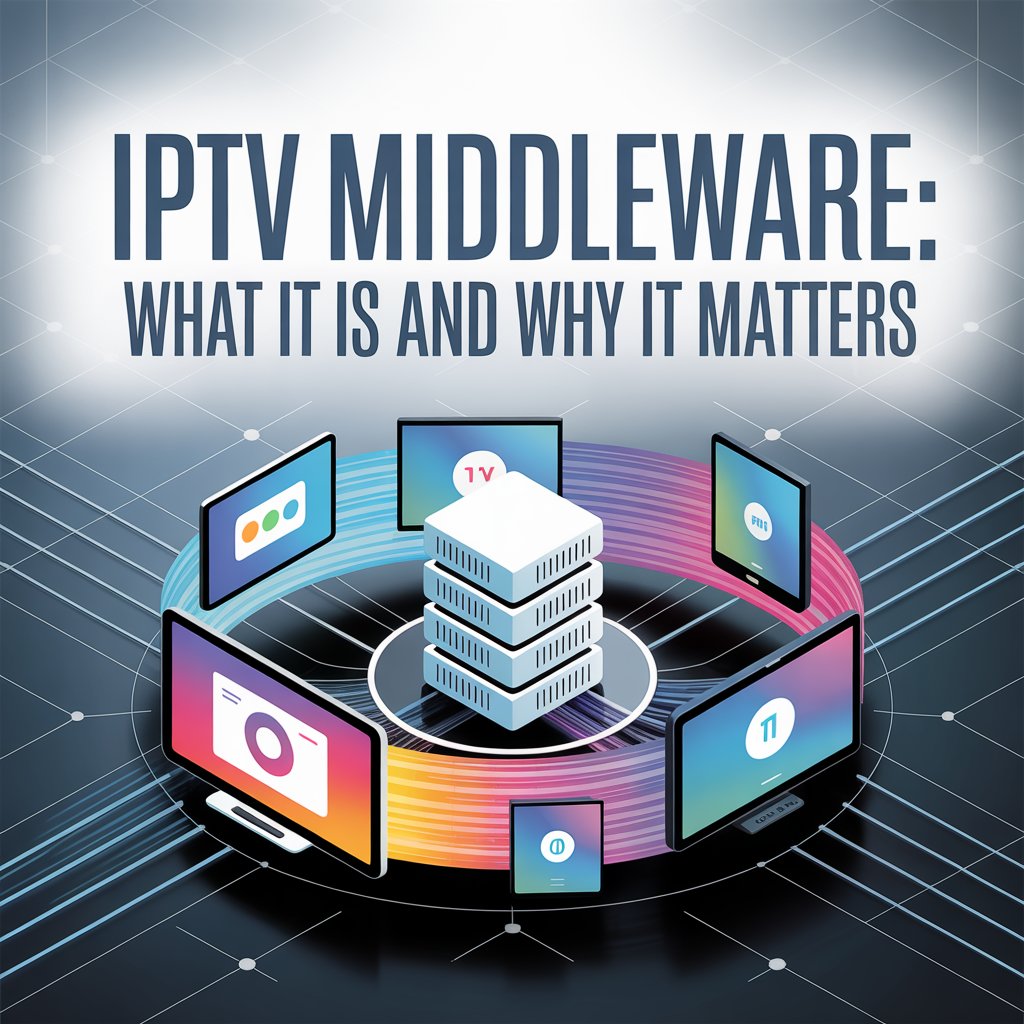
IPTV middleware represents the essential software layer that bridges content providers, service operators, and end users in Internet Protocol Television systems. Unlike traditional broadcasting methods where signals travel one direction from broadcaster to viewer, IPTV leverages two-way internet connections to deliver television content. Middleware essentially functions as the central nervous system of this operation.
Technically speaking, middleware is software that connects separate applications or systems, allowing them to communicate and exchange data. In the IPTV context, it’s the intelligent platform that manages content delivery, user interfaces, subscriptions, and interactive features. When you press “play” on your favorite show via an IPTV service, middleware coordinates dozens of processes behind the scenes—from verifying your subscription status to locating the optimal content server and delivering the stream to your device.
Content Providers → Middleware Platform → End User DevicesThis critical technology evolved from early IPTV systems where channel listings were pre-programmed into set-top boxes—a limited approach that couldn’t support Video-on-Demand (VOD) services or regular content updates. The modern middleware solution emerged when providers realized the potential of IP networks’ two-way communication capabilities, moving channel information to remote servers that could dynamically update user devices.
How IPTV Middleware Works in Modern Streaming Services
Understanding the technical workflow of IPTV middleware reveals why it’s indispensable for quality streaming experiences. When you interact with your IPTV service—whether changing channels, accessing VOD content, or checking program information—your request travels through multiple systems coordinated by middleware.
The process follows this sequence:
- Your device sends a request to the middleware platform
- Middleware authenticates your user credentials
- The system identifies available content sources
- It selects optimal delivery parameters based on network conditions
- Content streams to your device with integrated Electronic Program Guide (EPG) data
| Component | Function | User Impact |
|---|---|---|
| User Authentication | Verifies subscription status | |
| Ensures only paying customers access premium content | ||
| Content Management | Organizes and catalogs programming | |
| Enables search functionality and recommendations | ||
| EPG System | Manages program scheduling data | |
| Provides accurate show times and descriptions | ||
| Delivery Optimization | Adapts stream quality to bandwidth | |
| Prevents buffering during network fluctuations |
Middleware doesn’t actually process the video streams themselves but rather manages the information about where streams are located and how users can access them. This distinction is crucial—middleware deals with metadata (information about content), not the content streams directly.
Key Functions of Modern IPTV Middleware Systems
Modern IPTV middleware performs dozens of essential functions that collectively deliver the seamless viewing experience Americans expect from contemporary streaming services. These functions fall into several critical categories that work together to create a cohesive entertainment platform:
- Channel management: Organizing and delivering linear programming schedules
- Video on Demand (VOD) services: Enabling user-selected content playback
- Electronic Program Guides (EPG): Providing scheduling information for all available content
- User authentication and security: Verifying subscriber credentials
- Billing integration: Managing subscription tiers and payment processing
- Content protection: Implementing DRM solutions to prevent unauthorized access
- User interface customization: Creating branded, intuitive navigation experiences
- Analytics and reporting: Tracking usage patterns for business intelligence
Pro Tip: When evaluating IPTV services, check if their middleware supports adaptive bitrate streaming. This technology automatically adjusts video quality based on your current internet speed, preventing frustrating buffering interruptions during peak viewing hours—especially crucial for households with multiple devices streaming simultaneously.
The sophistication of middleware directly impacts user experience metrics that determine customer retention. According to industry analysis, platforms with outdated middleware suffer churn rates up to 30% higher than those with modern solutions, as viewers quickly abandon services with poor navigation or frequent technical issues.
Why IPTV Middleware Matters for American Viewers
For US consumers, the quality of IPTV middleware directly translates to real-world viewing experiences they either love or abandon. When middleware functions optimally, viewers enjoy lightning-fast channel changes, accurate program information, personalized recommendations, and seamless transitions between live TV and on-demand content. However, when middleware underperforms, users encounter frustrating delays, inaccurate scheduling information, and authentication issues that derail their entertainment experience.
Consider the Sunday afternoon sports scenario: millions of Americans simultaneously accessing live football streams. Only robust middleware can efficiently manage this traffic spike, ensuring each user receives uninterrupted service without costly infrastructure overprovisioning. Without intelligent middleware handling load balancing, many viewers would experience service disruptions precisely when demand peaks.
“In today’s competitive streaming market, viewers have zero tolerance for poor performance. If your service buffers or crashes during key moments, they’ll simply switch to a competitor within seconds.” — StreamHut industry analyst
The American viewing experience has evolved beyond simple channel selection to encompass integrated experiences where live sports, on-demand movies, personal DVR functionality, and social sharing all coexist seamlessly. Middleware makes this integration possible, creating the unified entertainment hub modern consumers expect from their streaming platforms.
Essential Features of Quality IPTV Middleware Solutions
As the IPTV market expands in America, not all middleware solutions deliver equal performance. Quality platforms share several critical characteristics that distinguish them from basic implementations:
| Feature Category | Basic Solution | Premium Solution |
|---|---|---|
| User Interface | Generic templates | Fully customizable, branded interfaces |
| Device Support | Limited to 1-2 platforms | Cross-platform compatibility |
| Scalability | Fixed user capacity | Elastic scaling for traffic spikes |
| Analytics | Basic usage reports | Advanced viewer behavior insights |
| DRM Integration | Basic encryption | Multi-DRM for content protection |
| EPG Quality | Static scheduling | Dynamic updates and recommendations |
The most sophisticated middleware platforms now incorporate AI-driven features like predictive content loading (anticipating what viewers might watch next) and intelligent bandwidth management that prioritizes critical streams during network congestion. These features have become essential as American households increasingly operate multiple streaming devices simultaneously.
Pro Tip: Look for middleware with integrated CDN (Content Delivery Network) management. This ensures content servers are strategically positioned across geographic locations, reducing latency for viewers nationwide—particularly important for delivering consistent performance to viewers in Hawaii or Alaska as well as continental US locations.
Benefits of Advanced Middleware for US Service Providers
For American IPTV providers, investing in robust middleware delivers tangible business advantages beyond improved user experience. The right middleware solution transforms operational efficiency while creating opportunities for revenue growth through innovative service offerings.
From a business perspective, modern IPTV middleware directly impacts three critical metrics:
- Customer Acquisition Cost (CAC): Premium middleware enables differentiated features that attract subscribers through unique value propositions
- Monthly Recurring Revenue (MRR): Advanced features support tiered pricing models with premium add-ons
- Churn Rate: Superior user experience significantly reduces subscriber attrition
CAC Reduction = (Advanced Features + Differentiated UX) / Marketing SpendMany US providers leverage middleware capabilities to implement targeted promotional strategies, such as location-based advertising or personalized content recommendations that increase engagement. This level of customization, powered by middleware analytics, allows providers to maximize advertising revenue while respecting viewer preferences.
Quality middleware also dramatically reduces operational costs. Automated user management, streamlined content ingestion processes, and integrated billing systems can reduce back-office staffing needs by up to 40% according to industry reports. Additionally, robust middleware platforms require less ongoing maintenance than patchwork solutions cobbled together from multiple vendors.
Implementation Challenges and Best Practices
Click here to view implementation challenges details
While IPTV middleware offers tremendous benefits, deployment presents several challenges that US providers must navigate carefully. The most common hurdles include: – **Content migration complexity**: Transferring existing programming libraries to new middleware platforms – **Legacy system integration**: Connecting with existing billing and customer management systems – **Device compatibility testing**: Ensuring seamless performance across dozens of potential viewing devices – **User data migration**: Transferring subscription details and viewing preferences without disruption Many providers underestimate the testing phase, leading to post-launch issues that damage brand reputation. Comprehensive quality assurance requires simulated stress testing with thousands of virtual users to verify system performance during peak traffic periods.
The most successful IPTV middleware implementations follow these industry best practices:
- Phased rollouts: Launch to small user groups before full deployment
- Redundant infrastructure: Implement failover systems to maintain service during outages
- Continuous testing: Maintain ongoing performance monitoring even after launch
- User feedback integration: Establish channels for rapid response to viewer concerns
Pro Tip: Allocate 20% of your middleware budget for customization and integration. Off-the-shelf solutions rarely meet all requirements for US markets with their diverse viewing habits and regulatory environment. Customization ensures your service stands out while meeting specific audience needs.
Providers who rush implementation often face costly remediation later. Industry experts recommend allowing 6-9 months for complete middleware deployment, including thorough testing phases that simulate Super Bowl Sunday-level traffic before public launch.
Future Trends in American IPTV Middleware
The evolution of IPTV middleware continues at breakneck speed, driven by American consumers’ ever-increasing expectations for seamless, personalized entertainment. Several emerging trends will reshape middleware functionality in the coming years:
- AI-powered predictive streaming: Middleware that anticipates content requests and pre-loads segments to eliminate buffering
- Integrated social features: Real-time sharing and group watching capabilities built into the platform
- Voice-controlled interfaces: Advanced natural language processing for intuitive content discovery
- Blockchain authentication: More secure, decentralized user verification systems
- Adaptive content personalization: Dynamic interface changes based on individual viewing patterns
The integration of augmented reality (AR) features represents another frontier, potentially allowing viewers to interact with broadcast content in entirely new ways—imagine seeing real-time player statistics overlaid during live sports without switching away from the main broadcast.
$$ \text{Future Middleware Value} = \alpha \times \text{Personalization} + \beta \times \text{Predictive Accuracy} + \gamma \times \text{Integration Depth} $$
As 5G networks expand nationwide, middleware will leverage increased bandwidth and reduced latency to deliver higher quality streams with innovative interactive features. Providers who invest in forward-looking middleware now will be positioned to capitalize on these emerging technologies without costly platform overhauls.
Choosing the Right Middleware Provider for US Markets
Selecting appropriate IPTV middleware requires careful evaluation of several critical factors specific to the American streaming landscape. Providers should assess potential solutions against these key criteria:
- Regulatory compliance: Solutions must accommodate FCC regulations and copyright requirements
- Scalability: Ability to handle traffic spikes during major events (Super Bowl, election nights)
- Local content integration: Support for regional programming and local broadcast affiliates
- Ad insertion capabilities: Sophisticated advertising technology for monetization
- Content protection: Robust DRM solutions meeting Hollywood studio requirements
When evaluating vendors, ask these essential questions:
- How does your middleware handle simultaneous viewing across multiple household devices?
- What disaster recovery protocols do you implement?
- How frequently do you update EPG data for accuracy?
- What analytics capabilities help optimize content acquisition decisions?
- How do you ensure compliance with evolving US media regulations?
The most successful US providers choose middleware solutions with open architecture that allows integration with best-in-class components rather than being locked into proprietary ecosystems. This approach provides flexibility to adopt emerging technologies as they become relevant to American audiences.
Conclusion: Middleware as Competitive Differentiator
In America’s crowded streaming marketplace, IPTV middleware has evolved from technical necessity to strategic advantage. While consumers may never see the middleware powering their favorite entertainment services, its quality directly determines whether they remain loyal subscribers or seek alternatives.
For US service providers, investing in sophisticated middleware represents one of the highest-impact decisions they can make. The right solution not only enhances viewer experience but also creates operational efficiencies, enables innovative revenue streams, and provides critical data for business decisions. As streaming becomes increasingly competitive, with new entrants constantly challenging established players, middleware quality will increasingly determine market winners.
As the transition from traditional cable to IP-delivered television completes its rollout across America, middleware will continue evolving to meet viewers’ escalating expectations. Providers who recognize its strategic importance now—rather than treating it as mere technical infrastructure—will be best positioned to capture and retain subscribers in this dynamic market.
Whether you’re a consumer enjoying seamless entertainment or a provider building the next generation of streaming services, understanding IPTV middleware reveals why some platforms thrive while others struggle in America’s demanding digital television landscape.