Picture this: It’s Sunday afternoon in suburban Chicago, and the Johnson family is settling in to watch the big game. They’ve cut the cable cord months ago, switching to a sleek IPTV service promising hundreds of channels without the hefty price tag. But as the fourth quarter begins, the screen freezes—buffering, buffering, buffering. Sound familiar? This frustrating scenario highlights a critical truth: IPTV services aren’t just about content; they’re fundamentally dependent on robust network infrastructure.
Internet Protocol Television (IPTV) represents a paradigm shift from traditional broadcasting models, delivering television content over IP networks rather than through satellite dishes or coaxial cables. Unlike streaming giants like Netflix that operate as Over-The-Top (OTT) services over the public internet, IPTV typically runs over managed networks with guaranteed quality of service (QoS) parameters—ensuring the buffer-free viewing American audiences now expect as standard. According to iptvbasics.com, nearly 50% of US households are abandoning traditional cable packages, driving exponential growth in IPTV adoption.
The US streaming market continues to explode, with projections indicating it will reach approximately $116 billion in market value within the next five years according to Statista. This isn’t just about swapping one entertainment source for another—it’s a complete reimagining of television delivery. The key differentiator lies in system architecture and delivery methodology: while traditional cable requires “miles and miles of cable, with a video headend to manage and maintain” as Harmonic Inc. explains, IPTV leverages existing IP network infrastructure.
In this guide, we’ll unpack how IPTV works beneath the surface, explore the network infrastructure essentials that make seamless IP television streaming possible, and provide actionable tips to optimize your home setup. Whether you’re a cord-cutter, tech enthusiast, or small business owner, understanding IPTV and network infrastructure unlocks reliable streaming that transforms how you experience television.
What is IPTV? Core Concepts and Evolution
Internet Protocol Television (IPTV) refers specifically to the delivery of television content using internet protocols rather than traditional terrestrial, satellite, or cable TV formats. This distinction is crucial for understanding the technology’s unique value proposition. As iptvbasics.com clarifies, “While both deliver content over IP networks, IPTV typically operates over managed, closed networks provided by telecom companies with service guarantees, whereas OTT services run over the public internet without quality guarantees.”
The evolution of IPTV spans several decades, beginning with experimental deployments in the 1990s. Early implementations were limited by bandwidth constraints and immature compression technologies. However, the transition from analog to digital broadcasting, coupled with the widespread deployment of broadband infrastructure, created the perfect conditions for IPTV to flourish. By the mid-2000s, major telecom providers began integrating IPTV into their service offerings, recognizing its potential to bundle television with internet and phone services—a strategy known as “triple-play.”
🔍 Key Technical Differentiators: IPTV vs. Traditional TV vs. OTT
IPTV operates within a controlled environment where service providers can manage bandwidth allocation and prioritize video traffic. Traditional broadcast TV uses one-way transmission (satellite or cable signals), while OTT services like Netflix operate over the public internet without dedicated bandwidth allocation. This fundamental difference explains why your Netflix stream might buffer during peak hours while your IPTV service remains stable.
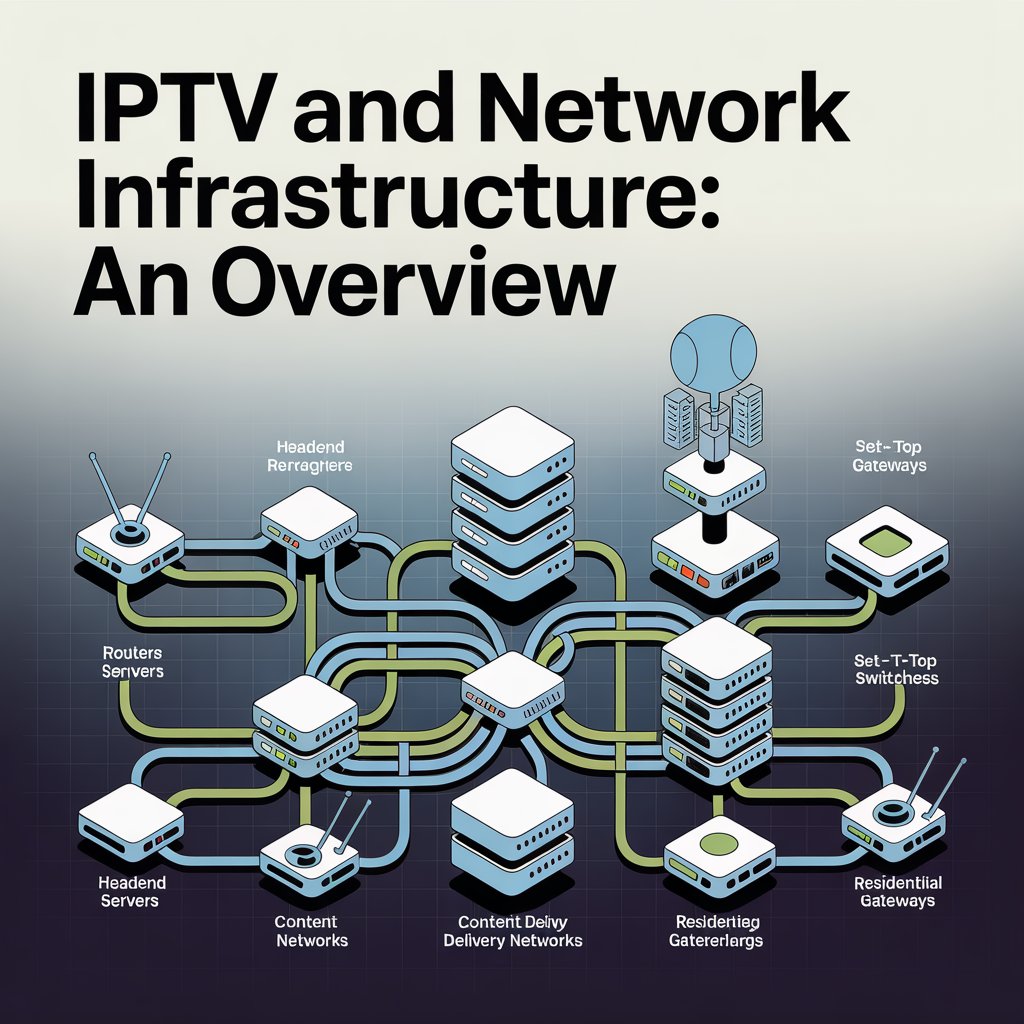
Modern IPTV architecture comprises several critical components working in concert:
- Headend Systems: The content aggregation point where live feeds from satellites, cameras, or studios are received, processed, and encoded
- Middleware: The software layer that manages user authentication, channel guides, and interactive features
- Set-Top Boxes/Streaming Devices: Hardware that decodes IP video streams for display on televisions
- Content Delivery Network (CDN): Distributed infrastructure that caches content closer to end-users for reduced latency
IPTV services offer several distinct advantages over traditional television models:
- On-Demand Flexibility: Access to Video-on-Demand (VOD) libraries alongside live programming
- Interactive Capabilities: Features like pause/rewind on live TV (time-shifted TV) and personalized recommendations
- Multi-Device Support: Seamless viewing across TVs, tablets, smartphones, and computers
- Bandwidth Efficiency: Multicast protocols allow a single stream to serve multiple viewers simultaneously
However, IPTV isn’t without challenges. Without proper network infrastructure, users may experience increased latency, packet loss, or quality degradation during peak usage periods. As inorain.com explains, “IPTV relies on a multicast technique to stream content—a highly efficient method that simultaneously delivers video to multiple recipients,” but this efficiency depends entirely on network configuration.
The growth trajectory of IPTV is staggering. By 2025, over 100 million homes worldwide will use Internet Protocol Television according to plume.com, representing a fundamental shift in how we consume media. This expansion isn’t just about replacing cable—it’s about creating a more personalized, interactive viewing experience that adapts to modern consumption habits. Understanding these core concepts provides the foundation for appreciating why network infrastructure isn’t merely supportive of IPTV—it’s absolutely essential to its success.
Network Infrastructure Basics for IPTV
To deliver seamless IP television streaming, IPTV requires a carefully engineered network infrastructure that addresses specific technical challenges. Unlike general internet browsing where occasional latency is tolerable, video streaming demands consistent bandwidth, minimal packet loss, and predictable latency. Let’s break down the foundational elements that make IPTV possible.
The Three-Layer Network Model
Most enterprise and service provider networks implement a hierarchical three-layer model optimized for IPTV delivery:
- Access Layer: The entry point for user devices (set-top boxes, smart TVs, mobile devices). This layer typically includes residential gateways, Wi-Fi access points, and Ethernet switches. For home IPTV setups, this means ensuring your router supports Quality of Service (QoS) features to prioritize video traffic.
- Distribution Layer: Where traffic aggregation occurs, often implementing VLAN segmentation to separate IPTV traffic from general internet usage. Business environments might use managed switches that support IGMP snooping to efficiently handle multicast IPTV streams.
- Core Layer: The high-speed backbone connecting distribution points, typically built with fiber optic networks capable of multi-gigabit throughput. Service providers invest heavily in this layer to ensure sufficient capacity for peak viewing periods.
graph LR
    A[Internet Backbone] --> B[Core Router]
    B --> C[VLAN-Segmented Switch]
    C --> D[Wi-Fi 6 Access Point]
    C --> E[Cat6 Ethernet]
    D --> F[Smart TV]
    E --> G[Set-Top Box]
Bandwidth Requirements and Planning
Bandwidth requirements for IPTV vary significantly based on video quality and delivery method:
- Standard Definition (SD): 3-5 Mbps per stream
- High Definition (HD): 8-15 Mbps per stream
- 4K Ultra HD: 25+ Mbps per stream
For a typical household with three simultaneous streams (living room TV, bedroom TV, and tablet), you’d need at least 45 Mbps for HD content. However, this calculation doesn’t account for overhead or other internet activities. Service providers often recommend doubling these figures for comfortable usage.
📊 Bandwidth Calculation Example
Consider a family with: – 2 TVs streaming HD content (15 Mbps each) – 1 tablet watching SD content (5 Mbps) – Background devices (smart home, phones): 10 Mbps Total required bandwidth = (15 × 2) + 5 + 10 = 45 Mbps Adding 25% buffer for network overhead: 45 × 1.25 = 56.25 Mbps Therefore, a 100 Mbps plan would provide comfortable headroom for this household.
Physical Infrastructure Considerations
The physical layer of your network infrastructure significantly impacts IPTV performance:
- Cabling: For wired connections, Cat6 or higher Ethernet cables support Gigabit speeds with better shielding against interference than older Cat5e cables. In new construction, consider installing fiber optic cabling to future-proof your setup.
- Wi-Fi Standards: Wi-Fi 5 (802.11ac) provides adequate performance for HD streaming, but Wi-Fi 6 (802.11ax) offers significant advantages for IPTV with OFDMA technology that handles multiple streams more efficiently and reduces latency.
- Network Topology: Avoid daisy-chaining multiple routers or switches, which introduces additional latency. Instead, use a star topology with a central switch connecting all devices directly.
Quality of Service (QoS) Implementation
QoS is perhaps the most critical network configuration for IPTV. It ensures video packets receive priority over less time-sensitive traffic like email or software updates. Effective QoS implementation involves:
- Traffic Classification: Identifying IPTV streams using DSCP (Differentiated Services Code Point) markings
- Queue Management: Creating dedicated queues for video traffic with higher priority
- Bandwidth Reservation: Allocating minimum bandwidth for IPTV regardless of network congestion
Most modern routers allow basic QoS configuration through their web interfaces. For advanced setups, consider managed switches that support IGMP (Internet Group Management Protocol) snooping, which optimizes multicast IPTV traffic by preventing unnecessary flooding of video streams to non-subscribing devices.
By understanding and optimizing these network infrastructure basics, you create the foundation for reliable IPTV delivery that meets the high expectations of modern viewers who consider buffering unacceptable.
Key Technologies Powering IPTV Delivery
The magic behind seamless IP television streaming lies in specialized technologies working in harmony to deliver high-quality video with minimal latency. These aren’t just buzzwords—they’re the engineering solutions that transform raw bandwidth into a premium viewing experience. Let’s explore the critical technologies that power modern IPTV services.
Video Compression and Transport Protocols
Without efficient compression, IPTV would be impractical for mass adoption. Modern IPTV systems primarily use:
- H.264/AVC: The workhorse codec that balances quality and compression efficiency, reducing video file sizes by 80% compared to older MPEG-2
- H.265/HEVC: Provides 50% better compression than H.264 at the same quality level, essential for 4K content
- AV1: An emerging royalty-free codec gaining traction for its superior efficiency
These codecs work with transport protocols specifically designed for real-time video:
- RTP (Real-Time Transport Protocol): Delivers timing information for synchronized playback
- RTCP (RTP Control Protocol): Monitors transmission statistics and quality of service
- UDP (User Datagram Protocol): Preferred over TCP for live streaming due to lower overhead and tolerance for minor packet loss
As iptvbasics.com explains, IPTV is “engineered for reliability, leveraging protocols like RTP (Real-Time Transport Protocol) and UDP (User Datagram Protocol) to prioritize smooth playback.”
Multicast vs. Unicast Delivery
One of IPTV’s most significant technical advantages over OTT services is its use of multicast technology for live content:
| Delivery Method | How It Works | Bandwidth Impact | Best For |
|---|---|---|---|
| Multicast | Single stream serves multiple viewers simultaneously | Minimal increase with additional viewers | Live TV channels |
| Unicast | Dedicated stream for each viewer | Linear increase with each additional viewer | Video-on-Demand (VOD) |
Multicast efficiency is transformative for service providers. During a major sporting event, a single multicast stream can serve thousands of viewers without multiplying bandwidth requirements. This is why IPTV services can offer hundreds of live channels without requiring terabit connections to your home.
Content Delivery Networks and Edge Computing
Modern IPTV leverages Content Delivery Networks (CDNs) to bring content closer to end-users. Instead of streaming from a central data center thousands of miles away, CDNs cache content at edge locations near population centers. This reduces latency and improves resilience against network congestion.
Edge computing takes this further by processing video streams closer to users. For IPTV, this means:
- Transcoding videos to appropriate resolutions based on device capabilities
- Implementing ad insertion without noticeable delays
- Applying real-time quality adjustments based on network conditions
Advanced Network Technologies
Several emerging technologies are enhancing IPTV delivery:
- SD-WAN for IPTV: Software-Defined Wide Area Networking intelligently routes traffic across multiple connections (broadband, 4G/5G, fiber) to maintain service continuity. If one connection degrades, SD-WAN seamlessly shifts IPTV traffic to a more reliable path without interruption.
- 5G Integration: As plume.com notes, 5G networks are becoming integral to mobile IPTV delivery. With theoretical speeds up to 10 Gbps and latency below 1ms, 5G provides a viable alternative to fixed broadband for IPTV in mobile scenarios.
- VLAN Segmentation: Virtual LANs isolate IPTV traffic from general internet usage, preventing other activities from interfering with video quality. This is particularly valuable in business environments where IPTV coexists with critical operations.
Quality Assurance Technologies
Maintaining consistent quality requires sophisticated monitoring:
- Forward Error Correction (FEC): Adds redundant data to streams, allowing receivers to reconstruct lost packets without retransmission
- Adaptive Bitrate Streaming: Dynamically adjusts video quality based on real-time network conditions
- Latency Measurement Tools: Continuously monitor network performance to identify and address issues before users notice
Verizon Fios provides a real-world example of these technologies in action. Their IPTV service leverages fiber optic networks with dedicated bandwidth allocation, achieving consistent 100+ Mbps streams that support multiple 4K channels simultaneously. This infrastructure investment translates directly to the buffer-free experience customers expect.
By implementing these key technologies, service providers create the robust foundation necessary for premium IPTV experiences that meet modern viewers’ demanding expectations.
Challenges and Solutions in IPTV Networks
Despite the sophisticated technology behind IPTV, several challenges can compromise the viewing experience. Understanding these pain points—and their solutions—is essential for both service providers and end-users seeking reliable IP television streaming.
Cybersecurity Threats in IPTV
IPTV networks face unique security challenges that differ from general internet services:
- Content Piracy: Unauthorized redistribution of premium channels through illicit IPTV services
- DDoS Attacks: Targeting service infrastructure to disrupt legitimate users
- Subscription Fraud: Stolen credentials and account sharing beyond permitted limits
- Man-in-the-Middle Attacks: Intercepting unencrypted streams
According to nexott.digital, “True Internet Protocol Television often relies on a dedicated, managed network by the service provider to guarantee a consistent quality of service (QoS)”—but this managed environment also requires robust security measures.
Solutions:
- Implement end-to-end encryption using AES-128 or higher
- Deploy digital rights management (DRM) systems like Widevine or PlayReady
- Use certificate-based authentication for set-top boxes
- Monitor network traffic for abnormal patterns indicating piracy
Network Performance Issues
Even with proper infrastructure, IPTV can suffer from performance issues:
- Packet Loss: As little as 1% packet loss can cause visible artifacts in video streams
- Jitter: Variation in packet arrival times disrupts smooth playback
- Latency: Delays exceeding 150ms become noticeable during live events
- Bufferbloat: Excessive buffering in network equipment causing artificial latency
Solutions:
- Configure proper QoS settings to prioritize video traffic
- Implement buffer management techniques like FQ-CoDel
- Use jitter buffers in client devices (typically 200-500ms)
- Regularly test network performance with tools like iPerf3
Home Network Optimization Tips
Most IPTV problems originate in the home network rather than the service provider’s infrastructure. Here’s how to optimize your setup:
- Wired Connections: Use Ethernet for set-top boxes whenever possible—Wi-Fi introduces unnecessary variables
- Router Selection: Choose models with robust QoS features and sufficient processing power
- Channel Planning: For Wi-Fi setups, select non-overlapping channels (1, 6, 11 for 2.4GHz)
- Mesh Network Considerations: If using mesh Wi-Fi, ensure dedicated backhaul channels separate from client traffic
🔧 DIY Home Network Checklist for IPTV
1. Test your internet speed during peak hours (7-10 PM) 2. Enable QoS on your router, prioritizing UDP ports 5000-6000 (common for IPTV) 3. Replace old Wi-Fi extenders with a proper mesh system or Ethernet backhaul 4. Update router firmware regularly for performance improvements 5. Connect IPTV devices to the 5GHz band to avoid 2.4GHz congestion
Service Provider Best Practices
For businesses delivering IPTV services, these practices ensure consistent quality:
- Implement redundant network paths to maintain service during outages
- Monitor network health using SNMP and flow-based analytics
- Conduct regular stress tests simulating peak viewing scenarios
- Provide customers with self-diagnostic tools to identify local network issues
By addressing these challenges with targeted solutions, both service providers and end-users can achieve the buffer-free, high-quality IPTV experience that modern viewers demand. The key insight? IPTV performance isn’t solely determined by internet speed—it’s the result of thoughtful network design and optimization at every layer.
Future of IPTV and Network Infrastructure
The evolution of IPTV and network infrastructure is accelerating at an unprecedented pace, driven by technological advancements and changing consumer expectations. Looking ahead, several key developments will reshape how we experience IP television streaming.
5G networks are transitioning from a mobile enhancement to a foundational technology for IPTV delivery. With theoretical speeds exceeding 10 Gbps and latency below 1ms, 5G Fixed Wireless Access (FWA) is becoming a viable alternative to traditional broadband for IPTV services. This shift enables truly mobile IPTV experiences—imagine watching a live sports event with stadium-quality streaming while commuting on a train.
Edge computing represents another transformative trend. By processing video streams closer to end-users, service providers can reduce latency while enabling new interactive features. Future IPTV systems might leverage edge nodes for real-time content customization, personalized advertising insertion, and even AI-driven video enhancement—all without noticeable delays.
The integration of artificial intelligence will revolutionize quality management. AI algorithms can predict network congestion before it impacts users, dynamically adjusting stream quality and routing. Machine learning models analyzing viewing patterns will optimize content caching strategies, ensuring popular programs are available with minimal latency.
As inorain.com suggests, “IPTV allows viewers to access their favorite shows quickly and easily across multiple devices,” and this multi-device experience will only become more seamless. Future IPTV architectures will prioritize context-aware delivery, automatically adapting content format and quality based on the viewing device, network conditions, and even time of day.
These advancements collectively point toward a future where the technical limitations of today’s IPTV systems become relics of the past—ushering in an era of truly ubiquitous, high-quality television streaming.
Conclusion
Mastering IPTV and network infrastructure isn’t just for tech professionals—it’s essential knowledge for anyone seeking reliable, high-quality television streaming. As we’ve explored, the difference between frustrating buffering and seamless viewing often comes down to understanding bandwidth requirements, implementing proper QoS settings, and optimizing your home network infrastructure.
The statistics speak for themselves: with nearly 50% of US households abandoning traditional cable packages and the streaming market projected to reach $116 billion, IPTV represents the future of television consumption. But this future requires more than just subscribing to a service—it demands attention to the network foundation that makes quality streaming possible.
Take action today: test your current bandwidth during peak hours, enable QoS settings on your router, and consider upgrading aging network equipment. For deeper insights, explore our guides on Home Network Upgrades for Streaming and Best IPTV Services for 2026. The perfect viewing experience isn’t magic—it’s engineered through thoughtful network design.