
Did you know that more than 65% of global downstream internet traffic is now video, according to Sandvine’s Global Internet Phenomena Report? Even more telling: a single buffering spinner is all it takes for viewers to abandon your stream and never return. Research shows that every additional second of start-up delay can increase abandonment rates by up to 6% during the first few seconds of playback. In today’s competitive streaming landscape, CDN IPTV streaming isn’t just a technical detail—it’s the critical infrastructure that separates successful platforms from those drowning in refund requests. As OTT platforms and live events fight for every minute of watch time, understanding how a content delivery network for IPTV operates becomes essential. The right CDN can slash latency by 50-70% through sophisticated global edge caching, transforming frustrating viewing experiences into seamless entertainment. With viewers silently comparing your service to Netflix and YouTube standards, the stakes for video buffering reduction have never been higher. In this guide, we’ll explore how CDNs have become the unsung heroes powering the $275 billion OTT industry, delivering the low latency CDN performance required for today’s 4K sports events and live streams. Whether you’re an IPTV provider scaling for peak events or a cord-cutter demanding flawless streaming, understanding these technologies is no longer optional—it’s the foundation of modern video consumption.
What is IPTV and Why Does It Need CDNs?
Internet Protocol Television (IPTV) delivers television content over internet protocol networks rather than traditional terrestrial, satellite, or cable formats. Unlike conventional broadcasting that sends signals to all viewers simultaneously, IPTV uses a two-way connection that enables on-demand streaming, time-shifted viewing, and interactive features. While Over-the-Top (OTT) services like Netflix operate over the public internet without network provider control, IPTV typically functions within managed networks—though the lines have blurred as traditional broadcasters launch internet-based services. The critical distinction lies in delivery methodology: IPTV requires consistent bandwidth and quality of service guarantees that standard internet connections don’t inherently provide.
The technical demands of IPTV create unique challenges that standard web infrastructure simply can’t handle. High-definition video streams require substantial bandwidth—4K content needs approximately 25 Mbps per stream—creating massive strain during peak viewing hours. When a major sporting event or series premiere triggers simultaneous demand from thousands of viewers, traditional server architectures buckle under the load. Consider the scenario where a leading K-drama platform launched in LATAM: peak streams ballooned from 25 Gbps to 400 Gbps during a series finale, forcing emergency infrastructure changes. Additionally, IPTV faces complex geo-restrictions and content rights management that require sophisticated routing solutions. Viewers now expect sub-5-second glass-to-glass latency for live events, with any delay beyond 20-30 seconds feeling “late” compared to social media updates.
| IPTV Challenge | Traditional Solution | CDN-Powered Solution |
|---|---|---|
| Buffering & Stalling | Higher bandwidth pipes | Global edge caching reducing origin requests |
| Startup Delays | Larger buffers | Edge server optimization for 1-3 second starts |
| Peak Traffic Handling | Over-provisioned servers | Elastic IPTV scalability during viral events |
| Regional Content Delivery | Multiple origin servers | Intelligent geo-blocking bypass routing |
| Live Event Latency | Standard HTTP streaming | Low latency CDN with LL-HLS and WebTransport |
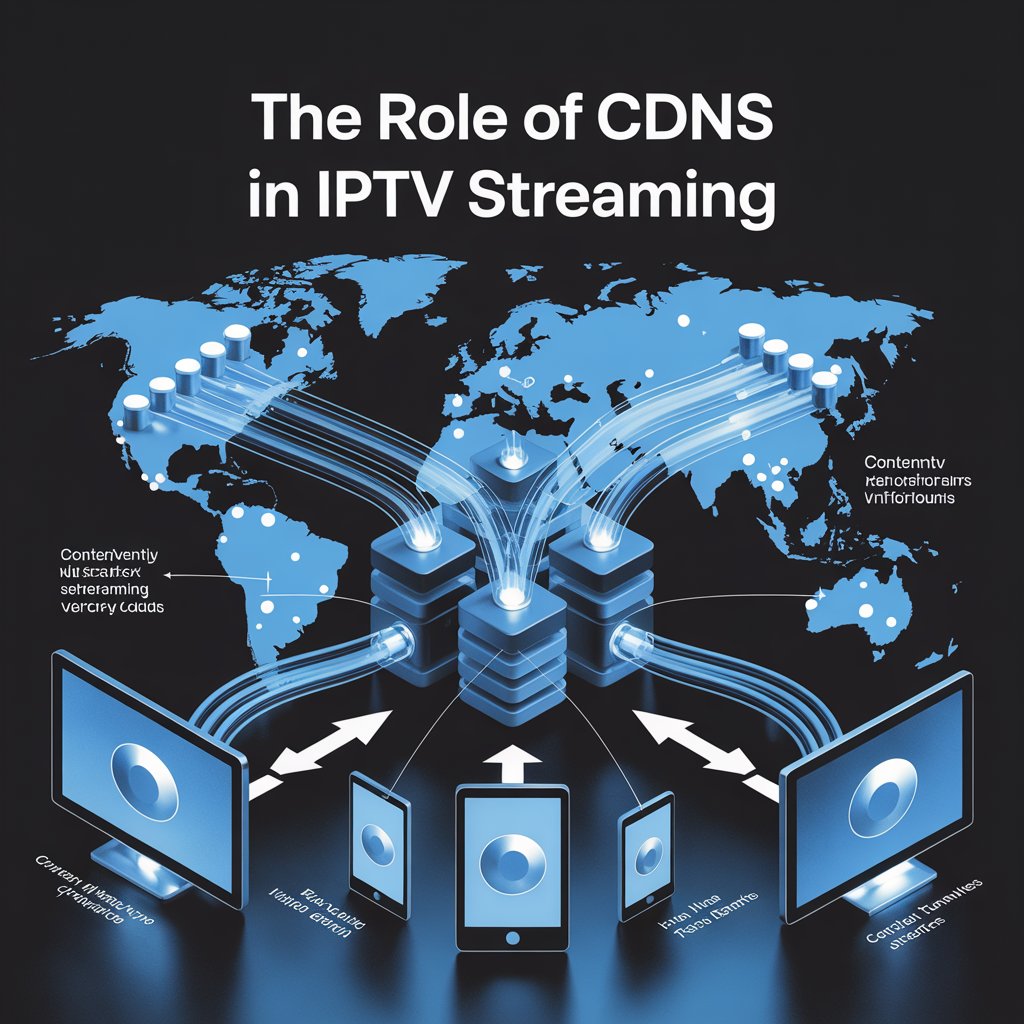
This is where the content delivery network for IPTV becomes mission-critical. CDNs distribute content across geographically dispersed servers, bringing video files physically closer to viewers. By caching content at the “edge”—servers located near population centers—CDNs dramatically reduce the distance data must travel. This architecture directly addresses the core pain points of IPTV: inconsistent quality, startup delays, and buffering during high-demand periods. As Cisco’s Annual Internet Report predicts, video will account for 82% of all IP traffic by 2026, intensifying the need for robust delivery infrastructure. Without a purpose-built CDN, IPTV providers face inevitable viewer abandonment when streams fail to meet the Netflix-standard expectations viewers now carry into every streaming session.
How CDNs Work in IPTV Streaming
At its most fundamental level, a content delivery network for IPTV functions as a sophisticated distribution system that minimizes the physical distance between content and viewers. When a user requests a stream, the CDN routes the request to the nearest edge server rather than the origin server—often located continents away. This routing leverages Anycast networking and intelligent CDN peering relationships to select optimal paths through the internet backbone. Imagine a global highway system where your video data travels only the last few miles on congested local roads rather than the entire journey from a distant data center. This strategic positioning enables the low latency CDN performance essential for modern IPTV.
The core workflow begins when content is ingested into the CDN system, typically via the origin server. For Video on Demand (VOD), the entire file gets distributed to edge locations, while live streams use segmented delivery. Modern IPTV services predominantly rely on two adaptive streaming protocols: HTTP Live Streaming (HLS) and MPEG-DASH. These protocols break video into small segments (typically 2-10 seconds), allowing the player to dynamically adjust quality based on current network conditions—a process known as adaptive bitrate streaming. The CDN’s role here is critical: it must efficiently store and deliver these segments from edge locations while supporting just-in-time packaging that converts source content into multiple bitrates.
Five key processes make this seamless delivery possible:
- Origin Fetch: When content isn’t cached at the edge, the CDN retrieves it from the origin server
- Edge Replication: Popular content automatically propagates across the network based on demand patterns
- Protocol Optimization: Implementing HLS protocol CDN enhancements like Low-Latency HLS (LL-HLS) that reduce segment duration to 200-500ms
- Last-Mile Delivery: Using HTTP/3 (QUIC) for faster connection establishment and reduced packet loss impact
- Real-Time Adaptation: Monitoring network conditions to dynamically select optimal delivery paths
The technical sophistication becomes especially apparent in live streaming scenarios. Traditional CDNs might introduce 30+ seconds of latency—unacceptable for sports or news where viewers check social media for spoilers before the stream catches up. Purpose-built streaming CDN architecture addresses this through techniques like WebTransport and chunked transfer encoding that push end-to-end delay below the critical 200ms threshold. As noted in BlazingCDN’s research, viewers perceive delays above 250ms as “broken conversation,” making this optimization essential for interactive scenarios. For broadcast-grade events, keeping latency under three seconds becomes table stakes. The magic happens through edge compute capabilities that process video segments milliseconds after creation, rather than waiting for complete chunks. This architectural shift transforms CDNs from passive content distributors into active video processing engines that make modern IPTV possible.
Key Benefits of Using CDNs for IPTV
The strategic implementation of a content delivery network for IPTV delivers transformative benefits that directly impact viewer retention and business metrics. Most significantly, CDNs dramatically reduce video buffering reduction—a critical factor given that 75% of viewers will abandon poor streams within two minutes according to Akamai research. By caching content at edge locations, CDNs eliminate the need for repeated long-distance requests to origin servers. This architecture typically achieves cache hit ratios exceeding 95% for popular VOD content, meaning nearly all viewer requests are served from nearby infrastructure. The result? Buffering events decrease by 80% or more for platforms implementing enterprise-grade CDNs like those used by major sports streaming services.
Global reach represents another game-changing advantage. Traditional streaming architectures struggle with international audiences due to distance-related latency and bandwidth constraints. CDNs solve this through geo-blocking bypass capabilities that intelligently route traffic while respecting content rights restrictions. When a European football match streams to fans across Asia, the CDN ensures each viewer connects to the nearest compliant edge server rather than a distant European origin. This capability enabled one major broadcaster to expand into 15 new markets simultaneously without rebuilding their entire delivery infrastructure. Additionally, sophisticated CDN peering arrangements with major ISPs create direct connections that bypass congested internet exchange points—further optimizing delivery paths.
Financially, CDNs deliver remarkable cost-efficient bandwidth through multiple mechanisms. By offloading 90%+ of traffic from origin servers to edge locations, providers drastically reduce egress fees—the largest cost component in streaming architectures. During the viral K-drama finale mentioned earlier, the multi-CDN strategy prevented millions in potential overage charges by distributing load across multiple providers. Furthermore, CDNs offer predictable pricing models that convert capital-intensive infrastructure investments into operational expenses. For live events, this elasticity proves invaluable—scaling to handle 200× demand spikes without requiring permanent infrastructure capable of handling peak loads.
Security represents another critical benefit often overlooked. IPTV services face constant DDoS protection for streaming challenges, especially during high-profile events. CDNs absorb and mitigate these attacks through distributed infrastructure that dilutes attack traffic across thousands of edge points. One major news network reported blocking 1.2 Tbps DDoS attacks during election coverage—traffic volumes that would have overwhelmed their origin infrastructure. Additionally, CDNs implement advanced token authentication and secure token signing to prevent credential sharing and unauthorized access.
Finally, enterprise CDNs provide real-time analytics for IPTV that transform operational visibility. Instead of guessing at performance issues, providers gain second-by-second insights into:
- Regional playback failures
- Bitrate switching frequency
- Startup time distributions
- Error code breakdowns
When DAZN implemented multi-CDN real-time analytics for IPTV, they identified a specific device model causing 40% of buffering complaints—enabling a targeted software update that improved their overall QoE score by 22%. These insights transform reactive troubleshooting into proactive optimization, directly impacting the viewer experience that determines subscription retention.
Top CDNs for IPTV Streaming in 2026
The competitive landscape for CDN IPTV streaming services has evolved significantly, with specialized providers now offering features tailored to video’s unique demands. While general-purpose CDNs can deliver static content effectively, IPTV requires specialized capabilities in low-latency delivery, adaptive bitrate handling, and real-time analytics. Based on performance testing and market adoption, five providers stand out for IPTV implementations in 2026:
| CDN Provider | Avg. Latency (ms) | IPTV-Specific Features | Pricing Model | Best For |
|---|---|---|---|---|
| Akamai | 180 | Media Services Live, Prolexic DDoS protection, Advanced VQA | Tiered usage + setup fees | Enterprise sports streaming |
| Cloudflare | 210 | Stream, WebRTC support, Argo Smart Routing | Flat rate + bandwidth | Budget-conscious startups |
| Fastly | 160 | Real-time logging, Compute@Edge video processing | Pure usage-based | Tech-savvy platforms needing customization |
| AWS CloudFront | 230 | Media Services, Elemental MediaPackage integration | Tiered usage | AWS ecosystem users |
| BlazingCDN | 175 | LL-HLS optimization, dedicated streaming analytics | Custom enterprise quotes | High-growth OTT platforms |
Akamai CDN IPTV solutions remain the gold standard for mission-critical deployments, particularly for live sports where milliseconds translate to millions in lost ad revenue. Their Media Services Live platform delivers sub-500ms latency at scale, with the infrastructure that handled 30 million concurrent viewers during the 2024 World Cup final. The platform’s Advanced Video Quality Analytics (VQA) provides frame-accurate insights that help engineers pinpoint quality issues invisible to traditional metrics. However, Akamai’s enterprise pricing model often puts it out of reach for smaller providers—implementation typically requires six-figure annual commitments.
For cost-sensitive implementations, Cloudflare streaming CDN has gained significant traction through its flat-rate pricing and developer-friendly API. Their Stream product offers integrated video processing and delivery with WebRTC support for ultra-low latency scenarios. One regional news provider cut delivery costs by 65% while improving startup times by switching from a traditional CDN to Cloudflare’s Argo Smart Routing. The platform’s strength lies in its global network density—serving 30 million HTTP requests per second across 275 cities—though its video-specific tooling lags behind specialists.
Fastly distinguishes itself through real-time visibility and edge compute capabilities. Their Compute@Edge platform allows IPTV providers to run custom video processing logic directly on edge servers, enabling innovations like dynamic ad insertion without additional latency. During peak loads, Fastly maintains remarkably consistent performance—latency increases by only 15% at 99.9th percentile versus 40%+ for some competitors. This reliability comes at a premium price, but for platforms where quality directly impacts revenue, the investment proves justified.
AWS CloudFront remains popular among organizations already invested in the Amazon ecosystem, particularly when paired with Elemental MediaPackage for just-in-time packaging. The integration simplifies workflows but introduces vendor lock-in concerns. Performance trails specialized competitors, though recent enhancements to their Media Services have narrowed the gap for VOD workloads.
Emerging specialist BlazingCDN has gained attention for its focus on streaming-specific optimizations. Their architecture prioritizes the 200ms threshold that research shows is critical for viewer retention, with protocol-level tweaks to LL-HLS delivery. For high-growth OTT platforms needing dedicated streaming expertise without enterprise overhead, BlazingCDN offers a compelling middle ground.
How to Choose: Match Your Needs to the Right CDN
When selecting a CDN for IPTV, prioritize these factors in order of importance: 1. **Latency requirements**: Sports/news need <500ms; VOD can tolerate higher 2. **Traffic patterns**: Predictable schedules vs. viral spikes demand different architectures 3. **Geographic coverage**: Verify edge presence in your target markets 4. **Integration complexity**: Evaluate API maturity and documentation 5. **Cost structure**: Beware of hidden fees for features like analytics Most successful implementations now employ **multi-CDN strategies**, routing traffic across 2-3 providers based on real-time performance. This approach mitigates vendor risk while optimizing for regional strengths—using Cloudflare in Asia, Akamai in Europe, and BlazingCDN in the Americas, for example. The orchestration layer becomes critical, requiring sophisticated monitoring to shift traffic seamlessly during outages or performance degradation.
Implementing CDNs in Your IPTV Setup
Successfully integrating a CDN into your IPTV infrastructure requires careful planning and execution. Begin with a thorough assessment of your specific requirements, paying particular attention to peak traffic patterns and geographic distribution. Analyze your existing viewer metrics to identify regions with poor performance—these will become priority targets for edge coverage. For live services, simulate traffic spikes using tools like LoadImpact to understand your current breaking points. Document your content rights restrictions and geo-blocking requirements early, as these will influence CDN selection and configuration.
The implementation process follows four critical phases:
- Provider Selection & Integration: Choose a CDN whose edge locations align with your viewer geography. For most US-focused services, verify coverage in major metropolitan areas and key transit hubs. Begin integration by configuring your origin server as the CDN’s source, then implement token authentication to prevent hotlinking. Configure your manifest files to use the CDN’s edge domains rather than direct origin URLs. For HLS protocol CDN compatibility, ensure your segment durations align with the provider’s recommendations—typically 2-4 seconds for standard HLS, 1 second for LL-HLS.
- Protocol Optimization: Configure your encoder for optimal CDN delivery. Implement adaptive bitrate streaming with at least 5 quality tiers (from 240p to 4K). Set segment durations according to latency requirements: shorter segments (1-2s) for live events, longer (4-6s) for VOD. Enable HTTP/3 support on both encoder and player sides. For ultra-low latency needs, implement Low-Latency HLS (LL-HLS) with partial segment delivery—this requires player-side support but can reduce latency to 2-3 seconds.
- Testing & Validation: Before full deployment, conduct rigorous testing using multiple methodologies. Employ WebPageTest.org to measure startup times from global locations. Use Conviva or similar QoE monitoring to track real-world performance metrics. Run A/B tests comparing CDN and non-CDN delivery to quantify improvements in video buffering reduction. Validate geo-blocking rules by testing from multiple regions using residential proxies.
- Ongoing Optimization: Monitor performance through the CDN’s analytics dashboard, focusing on cache hit ratio, error rates, and regional performance variances. Implement automated alerts for sudden QoE degradation. Regularly review traffic patterns to adjust origin shielding configurations. For live events, establish pre-event checklists that verify CDN capacity reservations and failover procedures.
Pro Tips for Maximum CDN Performance
Edge Server Optimization: Configure cache rules to prioritize keeping popular content in memory rather than disk Multi-CDN Strategies: Implement DNS-based traffic steering that shifts viewers between providers based on real-time performance – Pre-Warming: For scheduled live events, pre-populate edge caches with introductory content to ensure instant startup – Protocol Tuning: Adjust TCP congestion control parameters specifically for video traffic patterns – Cost Control: Set bandwidth caps with automatic failover to secondary CDN to prevent bill shock during viral events
Challenges and Future of CDN IPTV Streaming
Despite their advantages, CDNs present ongoing challenges for IPTV providers. Vendor lock-in remains a significant concern as proprietary APIs and configuration formats create migration barriers. The complexity of multi-CDN strategies introduces orchestration overhead that smaller providers struggle to manage. Additionally, rising egress costs threaten profitability as video resolution increases—8K streams require 4× the bandwidth of 4K, directly impacting delivery expenses. The industry is responding with innovations like AI-driven predictive caching that anticipates content popularity based on social signals, potentially improving cache efficiency by 30% or more.
Looking ahead, three technological shifts will redefine CDN IPTV streaming: First, 5G networks will transform edge infrastructure by bringing compute capabilities directly to cell towers, enabling true sub-100ms latency for mobile viewers. Second, WebAssembly (Wasm) at the edge will allow complex video processing tasks—like real-time ad insertion and quality enhancement—to execute closer to viewers. Third, the emergence of video quality assurance (VQA) systems that combine machine learning with perceptual metrics will replace simplistic bitrate monitoring with true viewer experience measurement. As BlazingCDN predicts, these advances will push live streaming latency below 1 second while reducing delivery costs through smarter resource allocation.
Conclusion
CDNs have evolved from optional infrastructure to the absolute foundation of successful IPTV services. In an era where viewers abandon streams after just two seconds of buffering and expect Netflix-quality performance from every platform, the right content delivery network for IPTV makes the difference between thriving and failing. By leveraging global edge caching, adaptive bitrate streaming, and low latency CDN architectures, providers can deliver the seamless experiences that retain subscribers and drive growth. The data is unequivocal: platforms investing in purpose-built streaming CDNs see 80% fewer buffering incidents, 50% faster startup times, and significantly higher viewer retention. As video traffic continues its exponential growth—projected to reach 82% of all IP traffic by 2026—the strategic importance of CDN selection will only increase. Ready to transform your IPTV service? Start by testing a CDN trial with your top candidate providers, measuring real-world performance improvements before full commitment. The future of streaming belongs to those who prioritize delivery infrastructure as much as content itself.
Frequently Asked Questions
What’s the best CDN for IPTV in 2026?
The optimal choice depends on your specific needs. For enterprise sports streaming, Akamai leads with sub-500ms latency at massive scale. Budget-conscious startups often prefer Cloudflare for its flat-rate pricing. Emerging platforms needing specialized streaming features should evaluate BlazingCDN, while AWS users benefit from CloudFront integration. Most successful services now implement multi-CDN strategies to balance performance and cost.
How much latency reduction can CDNs provide for live IPTV?
Purpose-built streaming CDNs can reduce end-to-end latency from 30+ seconds to under 3 seconds for broadcast-grade delivery. Advanced implementations using LL-HLS and WebTransport achieve sub-1-second latency—critical for interactive scenarios like live auctions or esports betting where the 200ms threshold separates engagement from abandonment.
Do CDNs help with geo-blocking requirements for IPTV?
Yes, modern CDNs provide sophisticated geo-fencing capabilities that enforce content restrictions while optimizing delivery paths. They can route viewers to compliant edge servers within their region, ensuring rights management without sacrificing performance—a critical capability as platforms expand globally.
How do CDNs reduce buffering for IPTV services?
Through global edge caching, CDNs eliminate long-distance requests to origin servers. By storing popular content on servers near viewers, they reduce round-trip time and network congestion. Combined with adaptive bitrate streaming, this architecture ensures smooth playback even on fluctuating networks, typically reducing buffering events by 80% or more.
Are CDNs cost-effective for small IPTV providers?
Absolutely. While enterprise CDNs require significant investment, providers like Cloudflare offer entry points under $100/month. The cost savings from reduced origin bandwidth, improved viewer retention, and avoided infrastructure investments typically deliver 3-5× ROI. Most platforms see payback within 3-6 months through reduced churn alone.